
Digital dentistry has transformed how dental laboratories produce restorations. Modern CAD/CAM technology allows laboratories to design and manufacture crowns, bridges, implant abutments, and dentures with exceptional precision and efficiency.
One of the most important pieces of equipment in this workflow is the dental milling machine. These machines allow dental technicians to transform digital designs into high-quality restorations made from zirconia, ceramics, PMMA, wax, and other materials used in restorative dentistry.
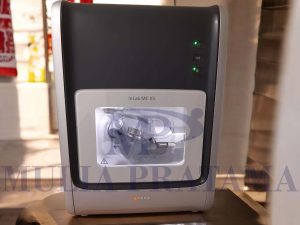
Among the advanced solutions available today, machines like the Dentsply Sirona inLab MC X5 are designed specifically to support high-precision dental laboratory production.
Dental laboratories looking for a reliable milling solution can explore the capabilities of the Dentsply Sirona inLab MC X5 Dental Milling Machine, a professional 5-axis milling system designed for modern dental CAD/CAM workflows.
Dental laboratories that want to understand how CAD/CAM milling technology works can also read our guide about dental milling machine technology.
Modern dental milling machines offer several advantages that significantly improve laboratory productivity. These systems allow laboratories to automate complex manufacturing processes that previously required significant manual work.
With a high-precision milling system, dental laboratories can achieve consistent results for restorations such as crowns, bridges, veneers, and implant-supported prosthetics. The ability to mill complex geometries with multiple axes allows technicians to produce restorations with excellent fit and surface quality.
Another major benefit of advanced milling machines is their compatibility with a wide range of dental materials. Laboratories can work with zirconia, ceramics, wax, PMMA, and composite materials depending on the type of restoration required.
Machines like the inLab MC X5 support both wet and dry milling, giving laboratories greater flexibility when processing different materials. This versatility makes it a valuable investment for laboratories that want to expand their digital dentistry capabilities.
Digital dentistry workflows typically begin with a digital scan of the patient’s teeth using intraoral scanners or laboratory scanners. The digital model is then processed using CAD software where dental technicians design the restoration.
Once the design is completed, the data is transferred to the milling machine where the restoration is precisely milled from the selected material block or disc.
This automated workflow improves production speed, reduces human error, and allows laboratories to produce highly accurate restorations consistently.
Dental laboratories that adopt advanced milling technology often experience significant improvements in productivity. By integrating CAD/CAM systems with reliable milling machines, laboratories can handle more cases while maintaining high quality standards.
In addition, digital workflows make it easier for laboratories to collaborate with dental clinics, allowing faster turnaround times for restorations and improved patient outcomes.
For laboratories seeking reliable performance and advanced milling capabilities, the Dentsply Sirona inLab MC X5 Dental Milling Machine remains one of the most trusted solutions in modern dental manufacturing.