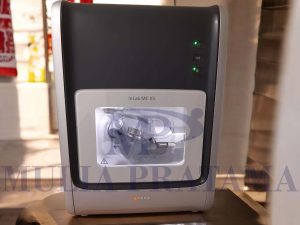
Dental laboratories today rely heavily on advanced CAD/CAM technology to improve efficiency, precision, and productivity. One of the most important investments for any modern dental lab is a high-quality dental milling machine. Choosing the right machine can significantly impact the speed, accuracy, and quality of dental restorations.
Dental milling machines are used to produce crowns, bridges, implant components, dentures, and other dental restorations from a variety of materials. These machines operate using computer-aided manufacturing systems that transform digital dental designs into physical restorations with extremely high precision.
Many dental laboratories today are adopting advanced milling systems such as the inLab MC X5, a powerful 5-axis milling machine designed to handle a wide range of dental materials including zirconia, PMMA, wax, and composite materials.
If you are looking for a professional dental milling solution, you can check the full specifications of this system here:
Dentsply Sirona inLab MC X5 Dental Milling Machine
One of the most important factors when choosing a dental milling machine is the number of milling axes. Basic machines often use 3 or 4 axes, while advanced systems use 5-axis technology. A 5-axis milling machine allows more complex angles and undercuts to be milled, which is essential for producing high-quality dental restorations.
Another important consideration is material compatibility. Modern dental laboratories require machines that can process a wide range of materials including zirconia, glass ceramics, titanium, cobalt-chrome, and PMMA. A flexible milling system allows dental labs to expand their services and increase profitability.
Production speed is also a critical factor. High-performance dental milling machines allow labs to produce restorations faster while maintaining consistent quality. This is especially important for labs handling large daily workloads.
Additionally, ease of integration with CAD software should also be considered. Dental milling machines that integrate seamlessly with digital scanning and CAD design software can significantly streamline the workflow of dental technicians.
Dental laboratories that are planning to invest in a milling system should carefully evaluate machine reliability, support, maintenance costs, and long-term productivity benefits.
Modern CAD/CAM dental milling machines have transformed the dental manufacturing process, allowing laboratories to deliver more precise restorations while improving operational efficiency.